In Memoriam: Jesse Jackson

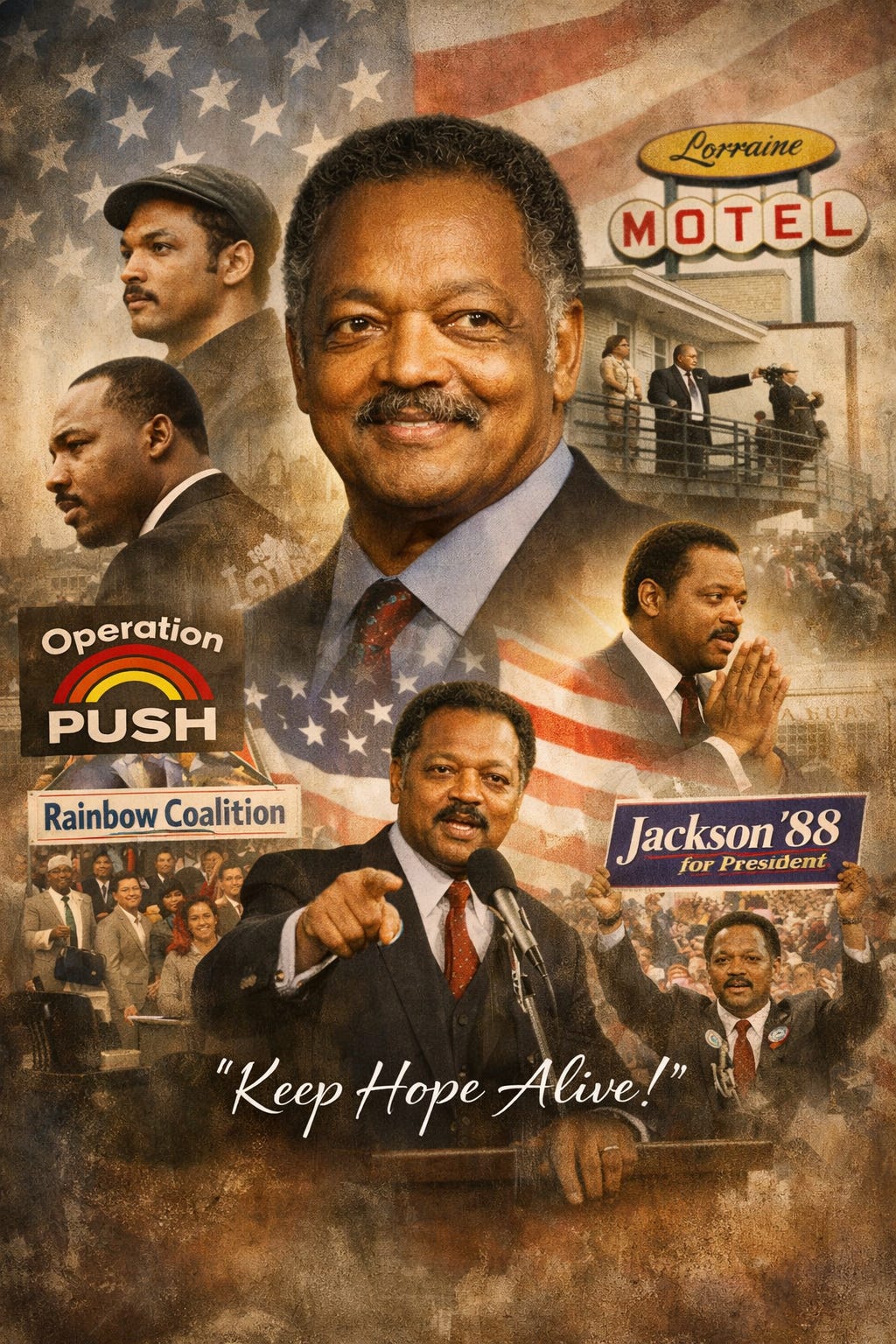
We pause to remember a man whose voice carried across decades of American struggle. A voice at once thunderous and pastoral, confrontational and consoling. Jesse Jackson was not merely present in the modern civil rights movement, he was one of its enduring architects, a bridge between eras, a witness to injustice, and a relentless advocate for dignity.
Born in Greenville, South Carolina, in 1941, Jackson rose from the segregated South into the heart of the American conscience. As a young activist, he worked closely with Martin Luther King Jr. and became a visible figure within the Southern Christian Leadership Conference. He stood on the balcony of the Lorraine Motel in 1968 when Dr. King was assassinated. A moment that seared itself not only into his life, but into the history of the nation.
But Jackson did not remain in the shadow of history. He stepped forward into it.
Through the founding of Operation PUSH and later the Rainbow Coalition, he sought to widen the moral imagination of America. To unite Black Americans, working-class whites, Latinos, laborers, farmers, and the marginalized under a single banner of shared hope. His presidential campaigns in 1984 and 1988 were once dismissed as improbable. Yet they reshaped the Democratic Party, expanded voter participation, and demonstrated that the highest offices of the nation were not the exclusive domain of a narrow few.
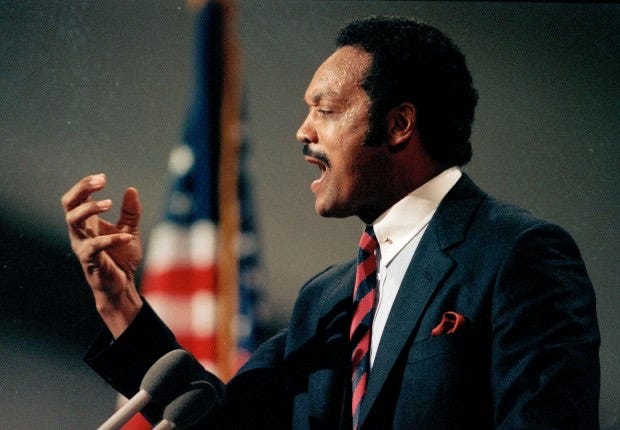
Jackson’s oratory became his signature instrument. He spoke in cadence and conviction, invoking scripture and constitutional promise in the same breath. He did not speak only of grievance. He spoke of possibility. “Keep hope alive,” he would say, and in doing so, he offered more than a slogan. He offered a discipline of endurance.
He was not without controversy, nor without critics. Few public lives of consequence ever are. But to measure him only by moments of misstep would be to miss the larger arc of his labor. For decades, he stood at labor disputes, on college campuses, in foreign capitals, and in neighborhoods too often forgotten. Pressing for voting rights, economic inclusion, peace negotiations, and opportunity.
Jesse Jackson belonged to a generation that believed moral language still had the power to move a nation. He believed protest was patriotic. He believed the excluded could be included. He believed the American promise was not a finished inheritance but a task.
His life reminds us that movements are not monuments. They are carried by living people who decide, day after day, to stand, to speak, and to persist.
In remembering Jesse Jackson, we remember not only a man, but a measure… of courage under pressure, of faith in the face of fracture, and of hope insisted upon even when hope seemed unreasonable.
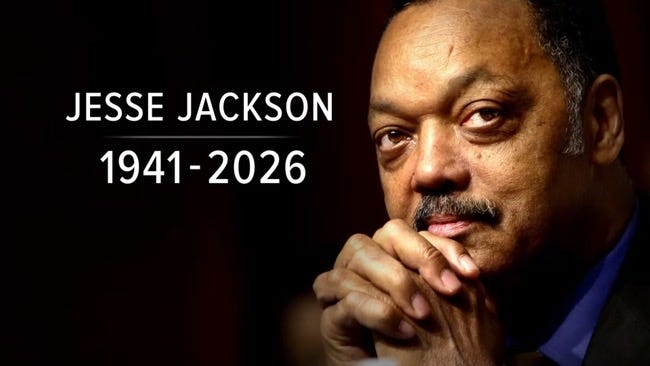
May his labor continue in those who refuse to surrender the work.
-OTL